
iPhone 11 Screen Replacement: Why the "Outdated" LCD Is Your Most Profitable Repair
A repair shop owner in Glasgow told me he dreaded iPhone 11 walk-ins.
"It's a £40 job," he said. "By the time I factor in parts, labour, and the customer haggling because they know the phone is old, I'm making £15. I'd rather do an iPhone 14 Pro Max."
Six months later, I showed him his own numbers. His iPhone 11 repairs had a 0.3% return rate. His iPhone 14 Pro Max repairs? 2.1%. After accounting for returns, rework labour, and the occasional angry Google review, his actual profit per iPhone 11 repair was £18.50. His actual profit per iPhone 14 Pro Max repair? £22.40.
The difference was £3.90 — but the iPhone 11 took 20 minutes and the Pro Max took 45.
Per hour, the iPhone 11 was his most profitable repair by a wide margin. He just couldn't see it because he was looking at the wrong number.
The LCD Advantage Nobody Talks About
Here's the fact that changes everything about iPhone 11 screen replacement: the standard iPhone 11 uses an LCD screen, not OLED.
Every iPhone from the 12 onwards uses OLED across the entire lineup. The iPhone 11 Pro and Pro Max use OLED. But the standard iPhone 11 — the one that sold more units than any other model in its generation — uses a Liquid Retina IPS LCD.
Why does this matter for repair shops? Because LCD is better than OLED in almost every way that affects your bottom line:
| Factor | iPhone 11 LCD | iPhone 12+ OLED |
|---|---|---|
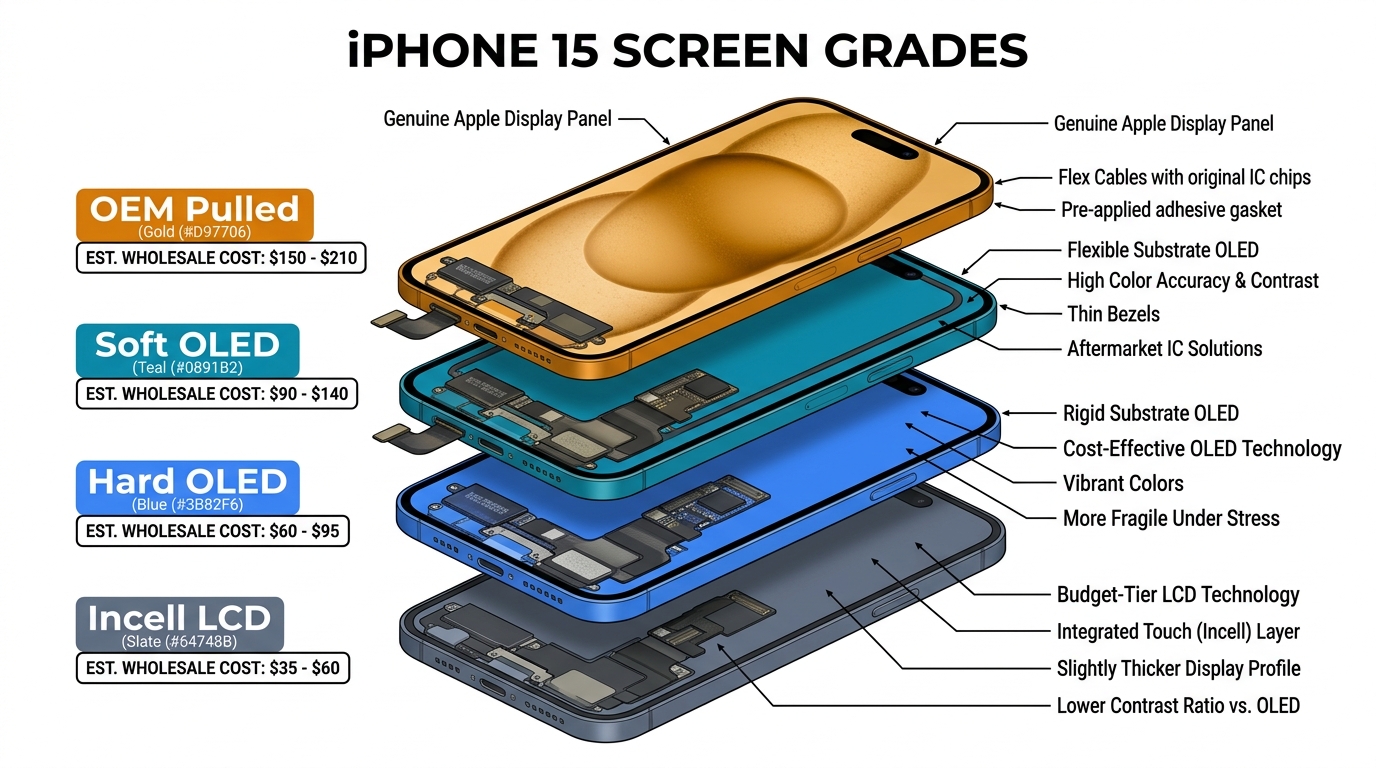
| Parts cost (wholesale) | £8–£15 | £30–£55 |
| Average RMA rate | 0.3–0.8% | 0.7–2.4% |
| Installation failure rate | Very low | Moderate (OLED is fragile) |
| Counterfeit risk | Low (LCD is cheap, no incentive to fake) | High (price gap creates counterfeiting) |
| Customer complaints | Rare (LCD matches original exactly) | Common (colour/brightness differences) |
| Repair time | 15–25 minutes | 25–45 minutes |
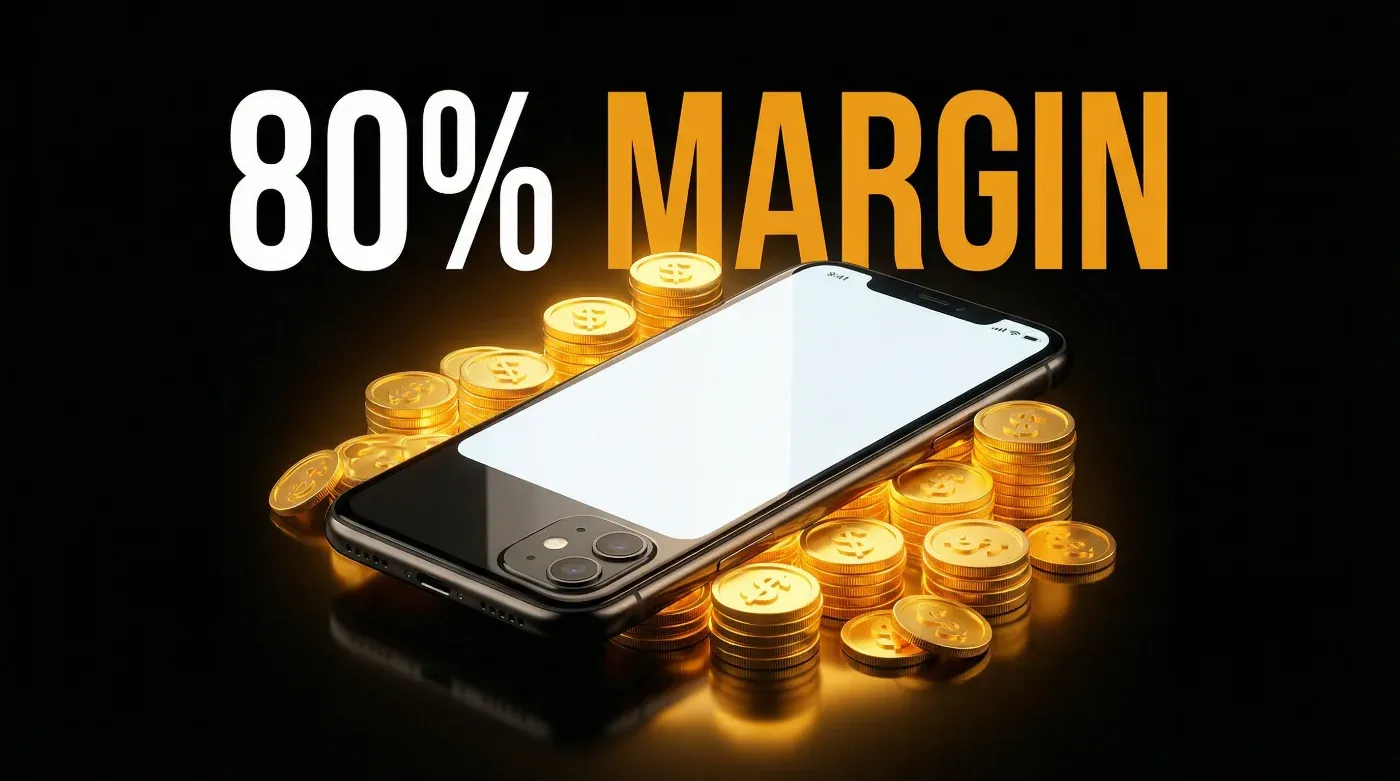
The maths: An iPhone 11 LCD screen costs you £10. You charge £50. That's an 80% margin. An iPhone 13 Soft OLED costs you £40. You charge £90. That's a 56% margin. And the iPhone 11 repair takes half the time with a fraction of the return risk.
The iPhone 11 isn't a low-value repair. It's a high-efficiency profit machine.
iPhone 11 Screen Replacement Cost: The Full Breakdown
Here's what you'll pay in the UK in 2026:
| Route | iPhone 11 | iPhone 11 Pro | iPhone 11 Pro Max |
|---|---|---|---|
| Apple Official (AppleCare+) | £25 | £25 | £25 |
| Apple Official (no AppleCare+) | £169 | £249 | £249 |
| Repair Shop (quality LCD/OLED) | £40–£65 | £70–£110 | £80–£130 |
| Repair Shop (budget) | £25–£40 | £45–£70 | £55–£85 |
| DIY — Quality Part | £10–£18 | £35–£55 | £40–£65 |
| DIY — Budget Part | £6–£12 | £18–£30 | £22–£35 |
Notice the massive gap between the standard iPhone 11 and the Pro models. That's the LCD vs OLED divide. The standard iPhone 11 is the cheapest screen replacement in the entire modern iPhone lineup.
The Pro/Pro Max Pricing Trap
Many repair shops price iPhone 11 Pro repairs too close to the standard model. "It's all iPhone 11, right?" Wrong.
The iPhone 11 Pro uses a 5.8-inch Super Retina XDR OLED display. The Pro Max uses a 6.5-inch version. These are completely different technology from the standard model's LCD. Different parts, different suppliers, different failure modes, different pricing.
The mistake: Charging £60 for an iPhone 11 Pro screen replacement because "it's an iPhone 11." Your parts cost is £35-55 for a Soft OLED. At £60, you're making £5-25 — barely worth the bench time.
The fix: Price iPhone 11 Pro repairs at iPhone 12 Pro levels (£80-120). The technology is identical. Customers who own a Pro model expect to pay more — they chose the premium phone.
Why the iPhone 11 Will Be Your #1 Volume Repair Until 2028
This is the insight that should change how you think about inventory:
The iPhone 11 sold approximately 37 million units in the UK market. It was the best-selling iPhone of its generation and one of the best-selling smartphones ever. These phones are now 6-7 years old — prime screen-cracking age.
The lifecycle curve: Phones crack screens most frequently between years 3-7. Before year 3, they're still relatively new and owners are careful. After year 7, owners start replacing the phone entirely. The iPhone 11 is right in the sweet spot.
Our projection from Huaqiangbei order data: iPhone 11 LCD screen orders from UK repair shops peaked in 2024 and are declining slowly — about 15-20% per year. But even with that decline, the iPhone 11 remains the single highest-volume screen repair for most UK shops. It won't drop below iPhone 13 volume until late 2027 at the earliest.
What this means for your inventory: Stock iPhone 11 LCD screens in bulk. The price is so low (£8-15 per unit) that you can hold 50-100 screens without significant capital risk. Compare that to iPhone 15 Soft OLED at £45-65 per unit — holding 50 of those ties up £2,250-3,250.
The iPhone 11 LCD vs OLED Upgrade Scam
Here's something we see increasingly in the UK market: repair shops offering to "upgrade" iPhone 11 screens from LCD to OLED.
The pitch: "For just £30 more, we can install an OLED screen that gives you better colours and true blacks."
The reality: There is no legitimate OLED upgrade for the standard iPhone 11. The iPhone 11's display connector, backlight driver, and software are designed for LCD. You can physically fit an OLED panel with an adapter board, but:
- Brightness is wrong. The software expects LCD brightness curves. OLED brightness behaves differently. The screen will be too dim at low settings and too bright at high settings.
- True Tone won't work. The calibration data is for LCD colour temperature, not OLED.
- Battery drain increases. LCD uses a constant backlight. OLED power consumption varies with content. The battery management system doesn't account for this, leading to inaccurate battery percentage readings.
- Lifespan is shorter. These adapter-board OLED conversions have a 5-8% failure rate in our data — ten times higher than a proper LCD replacement.
Our position: If a customer wants OLED, they should buy an iPhone 12. Don't sell them a Frankenstein conversion that will fail and damage your reputation. A quality LCD replacement on an iPhone 11 is the honest, reliable choice.
Step-by-Step: iPhone 11 Screen Replacement
The iPhone 11 uses the standard front-opening method with curved edges — the classic approach that every technician learns first.
Tools Required
- Pentalobe screwdriver (P2)
- Y000 tri-point screwdriver
- Suction cup and plastic pry tools
- Heat gun or iOpener
- Spudger and tweezers
The Procedure
Step 1: Power off. Remove the two pentalobe screws at the bottom.
Step 2: Apply heat to the screen edges for 2 minutes. The iPhone 11's curved edges make this easier than the iPhone 12's flat edges — the adhesive peels more naturally.
Step 3: Suction cup on the lower third. Create a gap at the bottom edge and work around with a plastic pick. The curved frame gives you a natural entry angle.
Step 4: Open like a book from the left side. Don't exceed 90 degrees.
Step 5: Disconnect the battery (three screws on the bracket).
Step 6: Remove the display connector bracket (four screws — note the different lengths) and disconnect the display flex cables.
Step 7: Transfer the earpiece speaker and front camera/sensor assembly from the old screen. The iPhone 11's earpiece is simpler than later models — no True Tone IC chip to worry about on the standard model.
Step 8: Connect the new screen, reconnect battery, and test:
- Touch response (all corners)
- Face ID
- Earpiece audio
- Proximity sensor
- Brightness range (check both minimum and maximum)
Step 9: Apply new adhesive strips and seal.
Pro tip: The iPhone 11's LCD screen is significantly more forgiving during installation than OLED. You can apply slightly more pressure when seating the connectors without risking display damage. This is one reason the iPhone 11 has the lowest installation failure rate — the LCD panel simply doesn't crack as easily as OLED.
iPhone 11 Pro/Pro Max: Different Beast Entirely
The Pro models use OLED and follow the same general procedure, but with OLED-specific precautions:
- Handle the screen more gently (OLED cracks under less pressure)
- The Pro Max's 6.5-inch panel is the largest in the iPhone 11 family — heat evenly
- True Tone requires either flex transfer or a programmer tool
- Test for PWM flicker using the slow-mo camera method (see our iPhone 15 guide)
The £1,200 Lesson: When "Cheap" LCD Screens Aren't LCD
A repair shop in Edinburgh ordered 200 iPhone 11 screens at £5.50 each — about £2.50 below the normal wholesale price. The listing said "Original quality LCD."
The screens worked fine initially. But within 3 months, 23 screens developed a yellow tint along the edges. The polariser film was delaminating — a sign of cheap adhesive in the lamination process.
The cost:
- 23 replacement screens: £230 (at proper wholesale price)
- Labour for 23 reinstalls: £345
- 8 customers who didn't return but left negative reviews: estimated £600+ in lost business
Total: ~£1,175 — all to save £500 on the initial order.
The lesson: iPhone 11 LCD screens are already cheap. There's no need to chase the absolute lowest price. The difference between a £8 quality LCD and a £5.50 reject is £2.50 per screen. On 200 screens, that's £500. The Edinburgh shop lost more than double that in rework alone.
The red flag: Any iPhone 11 LCD screen priced below £7 wholesale is almost certainly using recycled polariser film or reject-grade glass. The manufacturing cost floor for a decent LCD is about £6. Below that, corners are being cut.
Frequently Asked Questions
Is the iPhone 11 screen LCD or OLED?
The standard iPhone 11 uses a Liquid Retina IPS LCD display. The iPhone 11 Pro and Pro Max use Super Retina XDR OLED displays. This is the key difference that affects parts, pricing, and repair approach.
Can I upgrade my iPhone 11 screen to OLED?
We don't recommend it. OLED conversions for the iPhone 11 use adapter boards that cause brightness issues, battery drain, and have 5-8% failure rates. A quality LCD replacement is the reliable choice.
How long does an iPhone 11 screen replacement take?
Standard iPhone 11: 15-25 minutes for an experienced technician. Pro/Pro Max: 25-40 minutes due to OLED handling requirements.
Is it worth replacing an iPhone 11 screen in 2026?
Absolutely. The iPhone 11 still runs iOS 18, has a capable A13 chip, and LCD screen parts cost as little as £10. A £40-50 repair extends the phone's life by 2+ years — the best value repair in the iPhone lineup.
Does Face ID work after iPhone 11 screen replacement?
Yes, as long as the front camera and sensor assembly is transferred carefully. The iPhone 11's Face ID system is on the sensor flex, not the display panel.
What's the difference between iPhone 11 and iPhone 11 Pro screens?
Completely different technology. The iPhone 11 uses LCD (cheaper, tougher, no true blacks). The Pro uses OLED (more expensive, fragile, true blacks, 120Hz on later models). They are not interchangeable.
What to Do Monday Morning
-
Calculate your actual iPhone 11 profit per hour. Take your last 20 iPhone 11 repairs. Subtract parts cost, factor in any returns, and divide by average repair time. Compare that to your iPhone 13 or 14 profit per hour. The iPhone 11 number will surprise you.
-
Reprice your iPhone 11 Pro repairs. If you're charging less than £80 for an iPhone 11 Pro screen replacement, you're undercharging. The parts are OLED, the technology is identical to iPhone 12 Pro, and the customer chose the premium model. Price accordingly.
-
Stock up on iPhone 11 LCD screens. At £8-15 per unit, holding 50-100 screens costs less than holding 10 iPhone 15 OLED screens. The iPhone 11 will remain your highest-volume repair for at least another 2 years. Buy in bulk and lock in pricing.
Need iPhone 11 LCD screens that don't develop yellow edges after 3 months? Every batch from our Shenzhen facility is tested for polariser adhesion, colour uniformity, and backlight consistency. We also stock Soft OLED for iPhone 11 Pro and Pro Max. Request wholesale samples from PRSPARES.
PRSPARES supplies iPhone 11 LCD and OLED screen assemblies from our Huaqiangbei manufacturing base. Quality LCD from £8, Soft OLED for Pro models from £35. Batch-tested, documented, and backed by less than 1% RMA rates.